

Ancestor worship and genealogy form an integral part of Indian culture and civilization, representing a profound connection between past and present generations. These practices, intertwined with ritual, social identity, and historical continuity, highlight India’s rich cultural heritage, where remembrance of ancestors transcends mere veneration and becomes a key to understanding one’s lineage, community, and social structure.
The Cultural and Ritual Significance of Ancestor Worship
Ancestor worship in India is both a religious observance and a cultural imperative rooted in ancient traditions. This practice connects individuals with a continuous narrative of their family and community history. Ancestors are revered not only as forebearers but as active participants influencing the present and future wellbeing of their descendants. This is evident in the extensive rituals performed, especially during the Śrāddha rites, where offerings and ceremonies ensure the ancestors’ peace and blessings for the living family members. The rituals serve as a reminder that individuals are part of an unbroken chain of life, encouraging moral and social responsibilities inherited by ancestral legacy.
Handwritten genealogical records are admissible in court. They have helped solve many mysteries and disputes. These records come to the rescue when people want to claim their ancestral wealth and assets. They provide legal information on the family tree, specially when there are adoptions in the family.
Preservation of Genealogical Records: Vamshavalis
A remarkable practice of meticulously maintained genealogical records known as Vamshavalis or family chronicles, serve as custodians of lineage history. These are preserved at pilgrimage centers like Haridwar, Kurukshetra, Gaya, and Pushkar by traditional priests called Pandits or Pandas. These pilgrim recording centers are found all across the main rivers that are considered sacred and Tirtha sthalas.
Each family has a Tirtha associated with their family where they go for different rituals like annual pilgrimage, mundan ceremony or post death rituals like Asthi Visarjana, Shradhha and Tarpan. Family records can be recorded at any visit but what is mostly seen is the update after a death in the family, when the family members visit for the Asthi visarjan or offering of ashes to the sacred waters.
The data registered during an update entry by the priest contains:
- Date of visit
- Purpose of visit – was it for an occasion or just a pilgrim visit
- Names of the persons visiting along with following information – even the person who may not be from family are recorded like an accompanying driver or a family friend.
- Their current place of residence
- Their mutual relationship
- Any births in the family since last update
- Any adoptions since last update
- Any marriages in the family, with the details of the daughter-in-law or son-in-law like their place of origin, their gotra and profession if any.
- Any deaths that have not been recorded.
- Any migrations within the family are recorded.
- Professions of the children who have grown up since last visit are recorded.
- Donation given to Kul Purohit
Along with this, the visiting family members can add a personal note, that becomes a precious note for their next generations. This is where you see the evolution of linguistics in a region as different people use different languages from their times. Over time, these become the emotional notes for the unknown future generations. Migration records can chart out a global family tree. Donation records can give you an economic history of the family while also serving as a generous clue for you to leave enough for the purohita. The donation is important as this helps the purohita family maintain and preserve these records over generations.
Most families know their Kul Purohit at their Tirtha. Even if you do not know the purohita, if you know the place where your records are maintained, if you tell any purohit there your village of origin and your gotra, they will take you to your purohita. Yes, village and gotra are the two keywords you need to trace your ancestral records or Vamshavalli. The records are maintained by the hereditary lineage. So, while the families visit them for their own lineage, the records are parallely maintained by the generations of the same purohita lineage. If you are going after 1-2 generations, probably the people who last recorded are all gone, but the records connect the current generations through this age-old tradition.
Some of these Vamshavalis extend back several centuries, containing detailed annotations of family trees, marriages, births, deaths, professions, migrations, and visitation histories. Every visit to these priests for ritual purposes entails updating the family history, creating a living document that captures the continuous evolution of a family.
Vamshavallis in Scriptures & Literature
Many Indian scriptures contain Vamshavallis. Puranas form the smriti part of Indian scriptures. A purana is a text that has five elements or Lakshanas:
- Sarga
- Pratisarga
- Vamsha
- Manvantar
- Vamshanucharita
Vamsha refers to the lineage of Rishis and Devatas. Manvantar tells us about the Manu, who rules for a particular Manvatara and everyone in that manvantara is his lineage. Vamshanucharita talks about the royal lineage of dynasties like Surya Vamsha and Chandra Vamsha. So, you see that out of the 5 tenets of Puranas, 3 are linked to Vamshavallis. Mathematically, this is 60% of what the Puranas talk about and a glimpse of the importance attached to the ancestral records or Vamshavallis.
Kalidasa in his magnum opus Raghuvamsam, one of the Panch Mahakavyas, is nothing but the Vamshavalli of solar dynasty written poetically.
Different Modes of Maintaining and Revisiting Vamshavalis
The maintenance and consultation of Vamshavalis occur through several traditional and community-based modes, each contributing uniquely to preserving ancestral heritage:
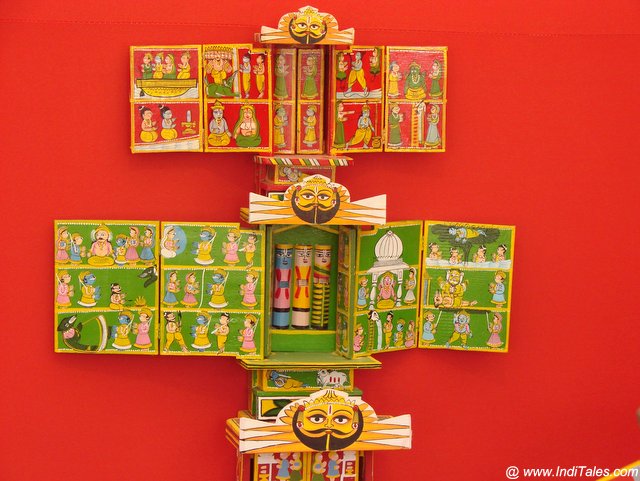
- Pilgrimage Center Records: Many families maintain their Vamshavalis with Pandits in pilgrimage towns such as Haridwar, Gaya, and Kurukshetra. Families visit these Tirthas for various rituals but most definitely for after death rituals like Śrāddha. when they update their lineage details with priests who act as genealogists. Records include detailed family trees, birth and death records, marriages across castes or regions, and even migrations or changes in professions. The priests maintain extensive archives of handwritten scrolls or documents that are sometimes coded in unique linguistic forms for privacy and authenticity. The system is networked, so a family can approach any recognized priest in particular centers, and their records can be accessed by mentioning the family’s core village and gotra.
- Home Visits by Genealogists: In some regions, genealogy maintenance is community-centric and interactive. Professional genealogists, known as Bhat or Charan, visit family homes periodically, typically every few years. They gather the family to narrate their ancestral stories, and update the Vamshavalis orally and some even pictorially. These genealogists serve as oral historians and cultural custodians, singing genealogical ballads and recounting the family’s history, profession, and migration patterns. They tell the glorious stories of the illustrious ancestors so that people remember who they have descended from and take forward the lineage and tradition. Such traditions ensure that even illiterate families pass down their lineage memory through song and storytelling, accompanied by symbolic pictorial records. These bards use visual storytelling tools like Kavad or scroll paintings in Rajasthan to tell the Vamshavalis. These are a piece of art today as a wooden box that keeps opening the layers of a story. Helavarus of North Karnataka, too visit homes and record Vamshavalis on paper with pictures.
- Community Scrolls and Chronicles: Certain artisan and craft communities maintain collective records of their genealogy and professional lineage through detailed scrolls and manuscripts. These community-level Vamshavalis map the professional landscape of families, serving as historical documents that establish artistic and craft heritage. Such scrolls have been seen in places like Cherial in Telangana where all the crafts and professionals related are listed and sung. Phad paintings of Rajasthan are used to tell stories of Pabu ji – a common ancestor of many communities there. Converted muslim communities[1] have managed to establish their Rajput ancestry through genealogical scrolls, which helped them secure Geographical Indication (GI) tags and legally establish their artisan identities as Pipad block printers.
- Family-kept Records: Some families maintain their own handwritten genealogical scrolls at home, updated with each generation that visits pilgrimage priests or family elders. These personal Vamshavalis offer a direct emotional link to ancestors, often featuring handwritten notes in evolving scripts and languages, reflecting family history and linguistic shifts over centuries. Most royal families maintain their Vamshavallis themselves. For example, the 629 CE copper place inscription that captures the Vamshavalli of Raja Harshavardhan found in Kurukshetra that is now at Jnanapravaha museum at Varanasi. It talks about the deities that they worshipped in their family tree.
- Legal and Court Records: Some genealogical records are preserved in legal archives and used as authoritative evidence in inheritance or family dispute cases. These records affirm statuses such as natural or adopted lineage and help resolve conflicts by establishing unequivocal family lines. Prof B N Goswami[2] could establish the Hindu Brahmin lineage of 18th CE Pahari painters Manaku and Naiksukh through their ancestral records in Kurukshetra, Pehowa and Haridwar.
- Lived Culture: Vamshavallis are a part of the lived culture. In Valmiki Ramayana, before Sri Ram Janaki wedding takes place, both sides tell their long list of ancestors to the other. It is both to remember the ancestors, seek their blessings but also to tell the couple whose lineage they come from and whose lineage they will carry forward together. In some parts of India, this tradition is still followed during weddings.
Historical and Linguistic Continuity
One of the emotional dimensions of genealogical records is the linguistic evolution visible in ancestral handwriting spanning centuries, showcasing changes in language, script, and expression. These records offer a physical and intimate connection with history. They evoke a sense of pride and belonging, reinforcing identities rooted in place, language, and shared heritage. For example, a recent family record has visitors writing in English, the previous generation wrote in a regional language, another one wrote in the court languages like Persian and as you go back you see the dominant language being used by the family members who came to record. Even when the same language and script is used, the way language is written changes with generations. Pandits use mostly Devanagari in North India and write in their own coded way.
These ancestral records and stories keep the current generations connected to their ancestors. It is also a reminder of the inheritance you have received and the lineage that you need to carry forward.
Challenges and Modernity: Digitization and Preservation
With increasing urbanization, migration, and the decline of joint families, ancestor worship faces challenges as rituals and oral traditions risk dilution. Discussions on digitizing these ancient records aim to preserve them for future generations. However, digital systems face issues of security, authenticity, and the loss of communal and personal engagement that handwritten records provide. The analog tradition, with its secret coding and community-based maintenance, remains a symbol of living heritage versus data vulnerability in the digital age.
Conclusion
Ancestor worship and genealogy in India embody a rich tapestry of ritual practice, social structure, personal identity, and historical memory. Preserved through both religious rites and meticulous genealogical records maintained by dedicated custodians, these traditions keep individuals connected to their roots and their communities. The various modes of maintaining and revisiting Vamshavalis—whether through pilgrimage center scrolls, home visits by genealogists, community chronicles, or family-kept records—ensure that this heritage remains vibrant and accessible across generations. As India modernizes, balancing tradition with new technologies poses questions about preserving this unique heritage while retaining its profound human and spiritual meanings.
References
- Anuradha Goyal, “Ancestor Worship and Genealogy in India,” Talk at Banaras Hindu University, March 2025.
- https://www.iosrjournals.org/iosr-jmr/papers/Vol2-Issue2/B0202011321.pdf
- https://indianexpress.com/article/express-sunday-eye/how-caste-based-genealogists-have-been-preserving-indias-history-9493932/
[1] https://indianexpress.com/article/express-sunday-eye/how-caste-based-genealogists-have-been-preserving-indias-history-9493932/
[2] https://www.iosrjournals.org/iosr-jmr/papers/Vol2-Issue2/B0202011321.pdf




Great article. your explanation was simple and practical. Wishing you continued success with the blog.